Middle East Turmoil: The Domino Effect on the Global Economy and Vietnam
Friday, 03/27/2026 - 10:35 AM (GMT+7)
TCVM - The escalating conflict in the Middle East is no longer a matter concerning only a few individual countries. In an increasingly interconnected world, the shockwaves originating from the Strait of Hormuz are directly impacting the global economy in general and Vietnam in particular, raising complex challenges related to energy security and the stability of global supply chains.
Turbulence in the Global Energy Market
The Middle East has long been regarded as the “energy heart” of the world, holding a large share of global oil reserves and playing a crucial role in supplying energy to many economies. Consequently, any geopolitical fluctuation in the region quickly generates ripple effects across international energy markets.
One of the most critical nodes in the global energy transportation system is the Strait of Hormuz, a strategic maritime route connecting the Persian Gulf with major oil markets around the world.
According to international energy and financial organizations, around 20% of global oil consumption is transported through this strait every day. As tensions in the Middle East escalate, the risk of disruption to shipping activities along this vital route has raised concerns about potential energy supply constraints.
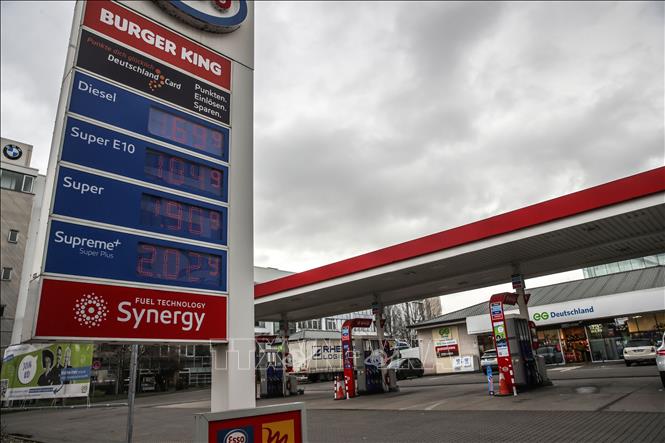
In such a context, global oil prices tend to rise sharply, driving up production and transportation costs worldwide. Since oil remains a primary energy source for many economic sectors, volatility in the energy market not only places pressure on industrial production but also contributes to rising inflation in many economies. At the same time, it heightens the risk of a broader energy crisis should the conflict continue to escalate.
(Source: Reuters)
Immense Pressure on the Global Economy
Beyond the energy sector, the conflict in the Middle East has also quickly spread to financial markets and international trade. Historically, whenever tensions escalate in the region, global markets tend to react strongly as risk concerns intensify, leading to sharp fluctuations in asset prices and investment flows.
In periods of heightened geopolitical uncertainty, investors often shift capital toward so-called “safe-haven assets” such as gold or the U.S. dollar. This typically pushes gold prices upward while stock markets experience significant volatility due to cautious investor sentiment.
In addition to financial turbulence, the Middle East conflict also threatens to disrupt major trade routes connecting Asia, Europe, and North America. The region serves as a key transit hub for global maritime trade and energy transportation. When instability rises, maritime insurance premiums, shipping costs, and logistics expenses tend to increase significantly, while international trade activities slow down.
According to the International Monetary Fund (IMF), prolonged geopolitical shocks can increase global trade and production costs, thereby placing additional pressure on economic growth. As the world economy is still recovering from recent disruptions, instability in the Middle East may further amplify risks to financial markets and global supply chains.
The Risk of a Reshaped Geopolitical Order
From a broader perspective of global political economy, the conflict in the Middle East is not merely a localized crisis but also a catalyst accelerating the restructuring of the geopolitical order that had already begun to emerge.
The war is intensifying polarization among major power blocs, where traditional economic ties based primarily on cost efficiency are gradually being replaced by alliances built on shared political and security values.
The threat to strategic transportation corridors has forced major economies to reconsider their reliance on sensitive transit points, encouraging the development of new trade routes and alternative energy hubs outside the Middle East.
Notably, the declining influence of traditional multilateral structures in managing conflicts is paving the way for a more clearly defined multipolar world order, in which regional powers and emerging economic blocs seek greater financial and energy autonomy.
Meanwhile, the trend of “de-dollarization” may accelerate as major oil-exporting nations consider alternative payment mechanisms to reduce exposure to geopolitical sanctions.
In this shifting landscape, global capital and technology flows are increasingly moving toward regions with higher stability and security indicators. Countries that maintain political stability and a consistent peace-oriented stance, such as Vietnam, are gradually becoming strategic destinations within newly emerging global supply chains.
The world order is therefore transitioning from unconditional globalization toward a more selective form of globalization, where national security and strategic autonomy become the ultimate measures of economic strength.
The Impact of the Middle East Conflict on Vietnam
Rising tensions in the Middle East are generating powerful external shocks, forcing an open economy like Vietnam to confront significant adaptation challenges.
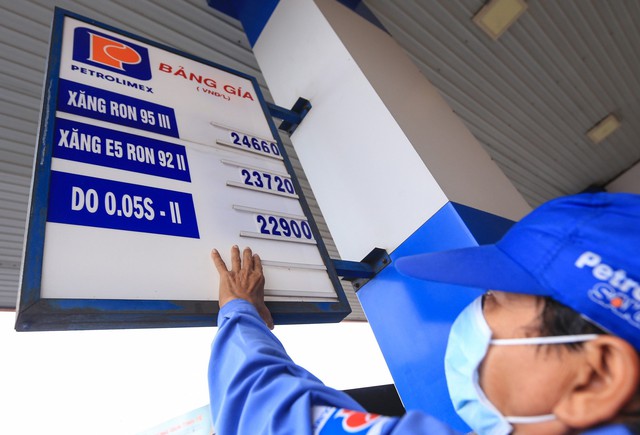
First and foremost, the most immediate impact lies in cost-push pressure from the global energy market. The region accounts for about 20% of global oil production and 25% of global LNG supply. Any disruption along vital routes such as the Strait of Hormuz can quickly push Brent oil and LNG prices higher, triggering a domino effect on domestic fuel prices.
As a result, the Consumer Price Index (CPI) faces substantial pressure, requiring the Vietnamese government to flexibly activate fiscal tools such as the Petroleum Price Stabilization Fund and consider adjustments to import taxes in order to protect consumers’ purchasing power as well as production input costs for businesses.
(Source: Government Electronic Newspaper)
Alongside rising energy costs, Vietnam’s logistics sector is facing an unprecedented crisis in both cost and time. Shipping companies being forced to alter routes - sailing around the Cape of Good Hope instead of passing through the Suez Canal - have extended transit times by 10 to 20 days, causing maritime freight rates to increase two to threefold.
For an export-oriented economy like Vietnam, surging logistics costs and air freight rates - which have already increased by around 70% due to airspace closures - not only erode corporate profits but also threaten the competitiveness of key export products such as electronics, textiles, and seafood in European and North American markets.
In response, the Ministry of Industry and Trade has issued urgent advisories urging industry associations to diversify transportation methods and explore alternative multimodal routes to reduce the risk of supply chain disruptions.
However, amid this volatile geopolitical landscape, Vietnam can still identify certain opportunities in both markets and diplomacy.
From an economic perspective, disruptions to production in parts of the Middle East may create market share opportunities for Vietnamese businesses, particularly in processed agricultural products and essential consumer goods.
On the diplomatic front, Vietnam’s neutral stance and consistent call for restraint and peaceful conflict resolution in accordance with the United Nations Charter reinforce its reputation as a responsible international partner while safeguarding the interests of Vietnamese citizens and enterprises operating in sensitive regions.
Overall, although the “heatwaves” from the Middle East present severe tests, Vietnam - through decisive government management and the flexibility of its private sector - is striving to transform these challenges into momentum for restructuring the economy toward a more sustainable and independent development path.
Viewed comprehensively, the conflict in the Middle East is not only a test of economic resilience but also a signal of profound shifts in the global geopolitical order.
For Vietnam, although rising energy costs and logistics disruptions pose real challenges, maintaining a consistent stance of peace, neutrality, and proactive adaptation to emerging supply chains is opening new opportunities to strengthen its position as a stable anchor within an increasingly multipolar world.
In an era where national security and strategic autonomy are becoming top priorities, the ability to transform volatility into momentum for structural reform will be the key for Vietnam not only to weather the current “heatwave,” but also to advance more strongly on the global economic map.
Phạm Ngọc Khánh Linh