FBI Warns Transnational Scam Networks in Southeast Asia Pose Global Threat
Friday, 03/27/2026 - 10:34 AM (GMT+7)
TCVM - At a virtual press briefing on February 24, senior FBI official Scott Schelble underscored the scale of industrialized scam operations in Southeast Asia, stressing that coordinated regional and global partnerships are essential to dismantle transnational fraud networks causing billions of dollars in losses each year.
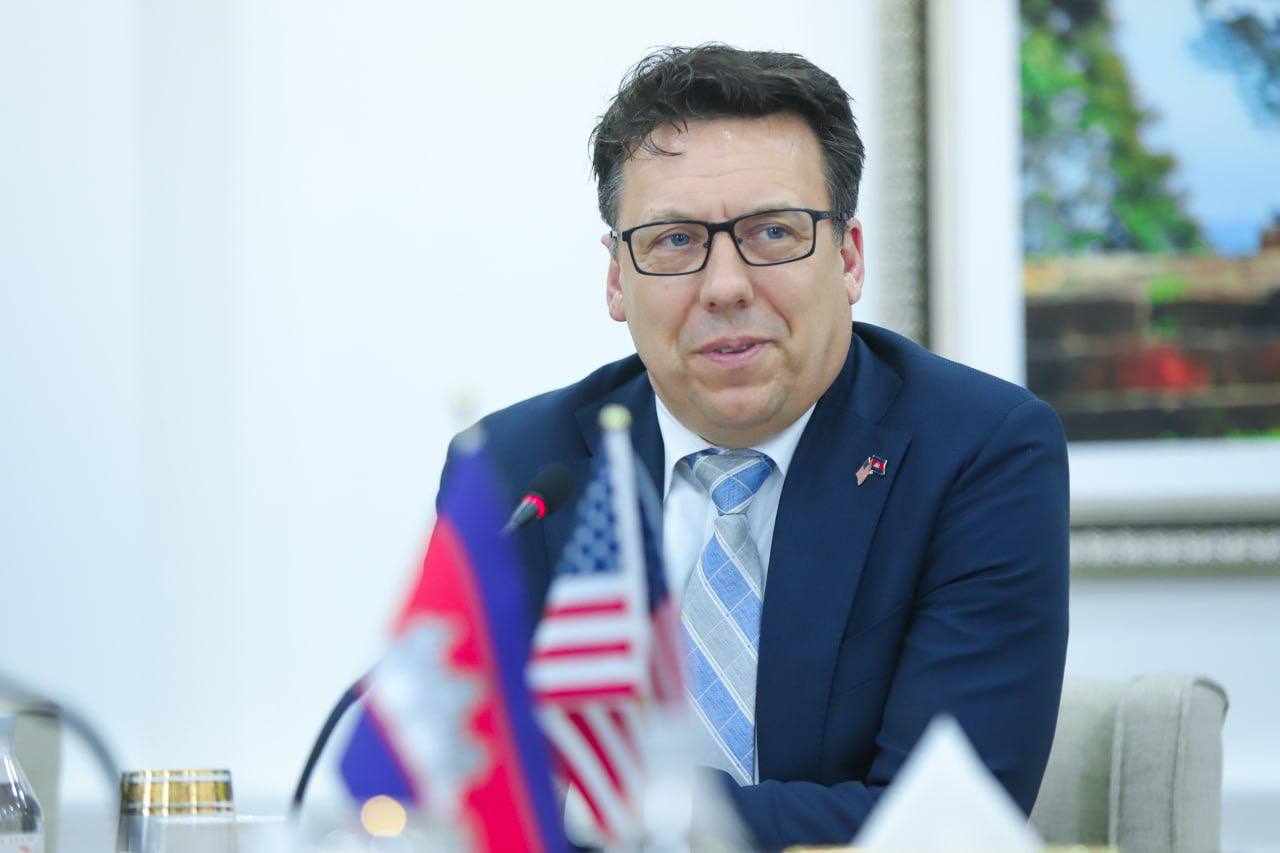
Scott Schelble, Deputy Assistant Director of the FBI’s International Operations Division. (Photo: Jacob in Cambodia)
During an on-the-record virtual press briefing hosted by the U.S. Department of State’s Asia Pacific Media Hub, Scott Schelble, Deputy Assistant Director of the FBI’s International Operations Division, outlined the growing threat posed by large-scale scam centers operating across Southeast Asia.
Schelble, who recently returned from official travel to Thailand, Cambodia, and Vietnam, said he met with senior law enforcement partners and observed firsthand the magnitude of transnational fraud networks in the region. According to him, organized crime syndicates — including Chinese criminal groups — are running industrial-scale scam compounds that target Americans daily. These operations are not isolated incidents but sophisticated, well-funded enterprises that exploit technology, borders, and vulnerable individuals, including victims of human trafficking, to generate enormous illicit profits.
Citing data from the FBI’s Internet Crime Complaint Center (IC3), Schelble noted that in 2025 alone, the bureau recorded more than 80,000 complaints related to such scams, with reported financial losses exceeding $2.9 billion. He emphasized that this form of criminal activity has evolved beyond traditional cybercrime, now encompassing organized crime elements such as money laundering, corruption, and human trafficking.
Responding to questions about whether scam centers are relocating from Cambodia to other countries, Schelble said these operations are highly mobile. When law enforcement pressure increases in one location, criminal groups can shift elsewhere, reinvesting profits to establish new compounds. For that reason, he stressed that the issue is not confined to any single country. “This is a regional problem that requires a coordinated regional solution,” he said, underscoring that partnership is key.
On cooperation efforts, Schelble highlighted the FBI’s operational partnership with the Royal Thai Police, including joint task forces and the deployment of FBI agents to work alongside Thai counterparts. In Cambodia, the FBI has previously partnered with the Cambodian National Police in task force settings and is seeking to build on those efforts to target scam compounds. In Vietnam, Schelble described productive discussions with the Ministry of Public Security on investigations of mutual interest. The FBI also maintains a Legal Attaché (LEGAT) office in Kuala Lumpur to coordinate with Malaysian authorities on intelligence-sharing and enforcement actions, particularly in cases involving trafficking and transnational fraud.

Senior FBI official Scott Schelble met with Chhay Sinarith, head of Cambodia's Committee for Combating Technology Fraud, on February 4 to discuss cooperation on combating online fraud. (Photo: Jacob in Cambodia)
Addressing questions about whether crackdowns by governments such as Thailand and Cambodia have been effective, Schelble said the problem is driven less by national conditions and more by the high profitability and accessibility of scam operations. The objective, he noted, is to make every region an “inhospitable environment” for such criminal enterprises through sustained cross-border cooperation and information-sharing.
On prevention, Schelble said the FBI is intensifying public education efforts to raise awareness of schemes such as “pig butchering” scams — investment and romance frauds that lure victims through social media and messaging platforms. He urged individuals to verify investment opportunities offered by strangers, scrutinize suspicious domain names that mimic legitimate financial institutions, avoid downloading unverified investment applications, and remain cautious of offers that appear too good to be true. Reporting suspected scams to authorities is critical, he added, as victim reports help law enforcement track trends and disrupt networks.
In his closing remarks, Schelble reaffirmed the FBI’s commitment to pursuing transnational fraud syndicates wherever they operate. He stressed that geographic borders will not shield criminals who target Americans and that dismantling scam compounds will require persistent, coordinated global action. While acknowledging that the fight is far from over, he expressed confidence that strengthened partnerships across Southeast Asia and beyond will enhance collective capabilities to combat these criminal networks effectively.